Philosophy & Methodology
Philosophy
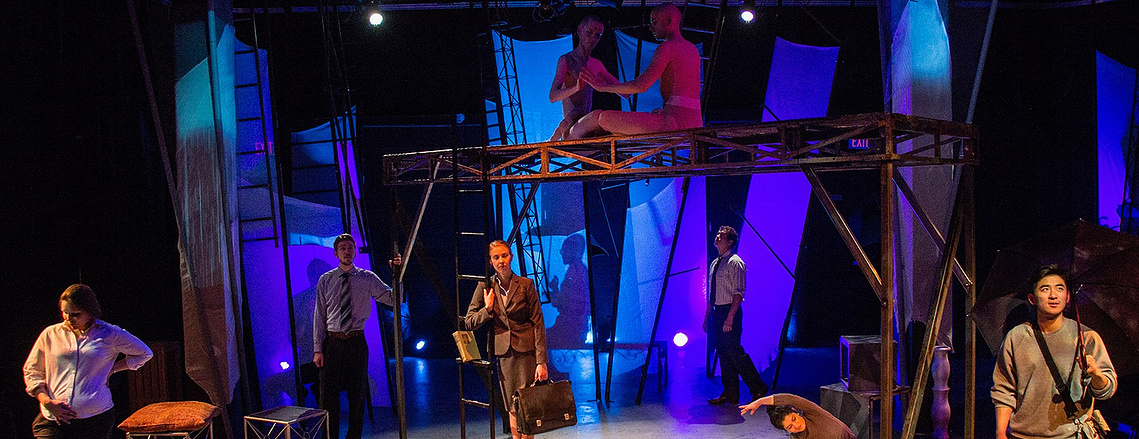
I approach theatre with the understanding that every work of art engages questions of power and how it shapes our most intimate relationships. I am drawn to staging that holds intimacy and spectacle in the same frame, exploring the ways in which the sensual and the sacred intersect.
By cultivating emotional vulnerability within carefully composed stage pictures, I seek to illuminate the common struggles that bind us — grief, desire, repression, longing, awakening. By placing the private body within a public image, I hope to create moments of recognition and belonging, inviting audiences to see their own vulnerabilities reflected onstage.
Methodology
The purpose of theatre is to move the audience - intellectually or emotionally, hopefully both. This movement is a change in the state of mind, or it can be several changes, each shift bringing the viewer to a different plateau of intellectual and emotional existence like a roller coaster whose hills could not be possible without its valleys. This arousal might incite or placate, or merely amuse. From a directorial viewpoint, the emotional journey of the audience is of chief concern rather than the intellectual, which is primarily the domain of the playwright. A director's concern is the quality of technique with which this meaning is delivered to the audience, not the actual meaning itself. This emphasis separates the art of performance from the non-art of instruction or promotion. The director must understand how the message is to be conveyed and attempt to obtain the finest and most suitable method of conveyance using the available means. In the theatre, this amounts to finding the most effective way to inspire their fellow artists contributing to this collaboration (designers, actors) to bring forth their most creatively effective and cohesive work possible.


On Working with Actors
My current approach to coaching actors is one that I have been developing for several decades, and it continues to evolve with every new theatrical experience. It is based on some of the primary tenets of Stanislavsky and Strasberg. It is also based on the writings of many other theatre artisans, including Stella Adler, Herbert Berghof, Harold Clurman, Elia Kazan, and William Ball. Incorporated into this basic system are notions that seem contrary to the essential elements of Strasberg's work, including some ideas developed by David Mamet and Peter Brook. This coaching technique is also based on what I have learned training actors over the last several decades, as well as observing many different directors in my capacity as a stage manager in the early years of my career. Stage management offers the unique opportunity to observe the entire process of a particular director while also being able to serve as a 'confidante' to both the actors and the director, providing access to the particular thoughts and reactions of both to the technique. I certainly do not wish to imply that this methodology is original but merely an ever-changing adaptation of the ideas of others as I interpret them.

In its current form, my technique consists of steps that are presented to the actors in the simplest of terms to ensure proper conceptual development of the world of the play while allowing the actors to develop their own characters who will live in that world cohesively.
An early objective for the director is to prevent the actor from tackling the premature development of characterization. Most actors innately want to act. They want to impress and show off their skills. Nevertheless, before they can begin building an authentic character that they can fully commit to and that will eventually be a thoroughly developed and dimensional entity, they must first comprehend the ultimate goal of the artistic endeavor. What is the story that they, as a group, are going to relay to the audience? During this text reading, the emphasis is placed on viewing the play as a whole and discovering the story, and the actors are strongly encouraged not to "perform" but rather to absorb it.
No future reading of the play will match the importance of this first reading because once the story is known to the actors, any sense of mystery concerning the plot outcome is removed. Therefore, an atmosphere should be created in the rehearsal hall that would place the actor in the most relaxed state possible to enable the best experience of the story. This experience will give the actor an emotional resource to call upon during the future development of their character. After each beat is given to the actors, one actor will be asked to 'sum up' the action that has taken place in the last beat, after which the group is asked to add any additional comments or questions regarding the action. These observations should be kept brief, and the objective of finding out the story the play is telling must continue to remain the focus.
In the next phase of rehearsal, the actors begin an investigation of the characters that they will be playing. This investigation is merely a fact-finding exploration, not an interpretive one, and the actors should be encouraged to refrain from making any decisions at this time. Terms like "I feel that this character…" or any attempt to speak of the character in the first person should be avoided. Instead, the focus should be on creating a 'characterization list,' simply a list of any remarks, comments, or insinuations made about their characters. The primary source for creating this list is the play itself, and the actor must look for what is said regarding the character. First, what does the playwright say about the character? Second, what do the other characters in the play say about the character? Third, what does the character say about themself? Lastly, what is insinuated by the character's actions throughout the play?
Besides setting the groundwork for building the character, this step emphasizes to the actor that the characters must be all things stated or implied in the text. This emphasis helps avoid interpretive contradictions often seen when the actor or the director has yet to entirely explore and commit to the text. One problem often occurs when the actor finds contradictions in the script, usually between what two characters say in the dialogue or when a complexity such as sarcasm is possibly presented. Here, once again, the actor should only make decisions once more evidence from the script is gathered. The actor must take the text at face value whenever possible, putting the scientific idea of 'Occam's razor' into play by always choosing the most obvious choice first.
Much has been written regarding intention, motivation, or super-objective. I like to use the word 'fight' because it is the most proactive of these terms (Michael Shirtloff, Audition). Most trained actors already have developed their take on this aspect of character development. However, a director should refrain from making assumptions when dealing with such an essential element of the play. The emphasis in this technique is the action taken by the character. I often use the analogy of sports to introduce this concept. As you may know, almost half of the United States adult population tunes in to the Super Bowl every year. The attraction is simple: they want to see who will win. Most of the viewers already have a basic grasp of the rules of the game, and they may even know a bit about the individual players and root for them. Throughout the game, the players fight to win. The harder the players fight, the more exciting it is for the audience in the stands.

The actor should be encouraged to find the objective by weighing all the evidence presented in the text and working with their fellow actors to create objectives that run in currents that will enable the most direct conflict possible. Then, using the text, the actors should work together to find a way to play their objectives (both the overall super-objective and the beat-by-beat objectives) in a way that brings forth the best possible fight.
There are some things to watch out for when the actors are endeavoring to find the best phrasing for their objectives. The objective "to escape," for example, is often chosen by novice actors but usually does not work because, unless a character is trapped onstage in some cage, the actor can simply fulfill this objective by walking off, leaving the audience with no fight whatsoever. Zeroing in on what your character is fighting for and finding the best way to state that objective can sometimes be challenging. When all else fails, and the actor cannot discover the character's objective, I recommend the actor start with the objective "to be loved." It doesn't always work, but it can sometimes lead the way to the true intent of the character.
There is no need to spend precious rehearsal time discussing aspects of textual analysis unrelated to character development or motivation. Now the actors, having done much preparatory work for this moment, can make educated decisions regarding character development rather than random choices based solely on impulsive reactions to the text.
There are many different takes on Stanislavsky's 'magic if,' but by phrasing the question, "What action would I take if I were this character in this situation?" the actor is taking the most crucial step in the creation of a truly developed and fully realized character. When stated in this manner, the question brings together all three of the first steps and allows the actor to bring their own being and life experience into the picture.
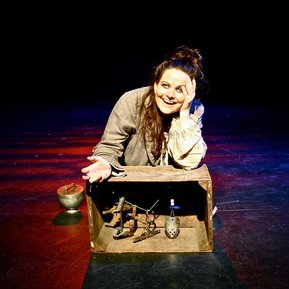
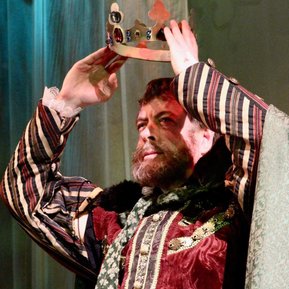
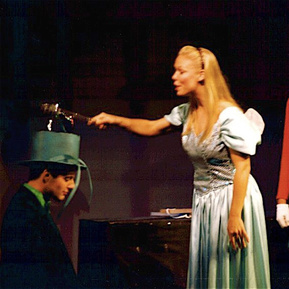
At this point in the process, the actors can now begin to put the character on its feet through movement. In general, all movement must stem from consistently asking the above question so that every action taken has a purpose (moving the character closer to the stated goal) and is in keeping with the character as established by the playwright. Whether the actor is given specific blocking by the director or left to find the movement organically is a decision that should be left up to the director, who must take into account many factors, such as the amount of rehearsal time, the number of actors on stage at any given moment, and the inherent style of the play. Personally, I like to give the actors a basic skeleton of movement, which should be learned and carried through fully before the actor chooses to adapt or change it to suit their objectives.
Character development is now well underway and is beginning to come through clearly in the work of the individual actors. Once purposeful movement has been established, the actors become more specific in their actions. It is time to bring the actors out of their shells and focus on relationships. The basis for any character relationship should be revealed primarily in the text. However, it can also be based on the observations of how the other actors have brought themselves into the character and the truths presented by those actors. If the actors have worked together to develop phrasing for their intentions that set up a crisp and direct fight, then much of the groundwork has already been laid and merely needs to be fleshed out.
The question of truth and how to bring it forth in performance is difficult. But because this phase consists of long stretches of uninterrupted scene work, I find that most actors who have developed a solid foundation in terms of character development begin to naturally gravitate away from the cerebral into the realm of honesty during this stage, particularly if they play the sincere desires of the character in whatever situation is presenting itself.
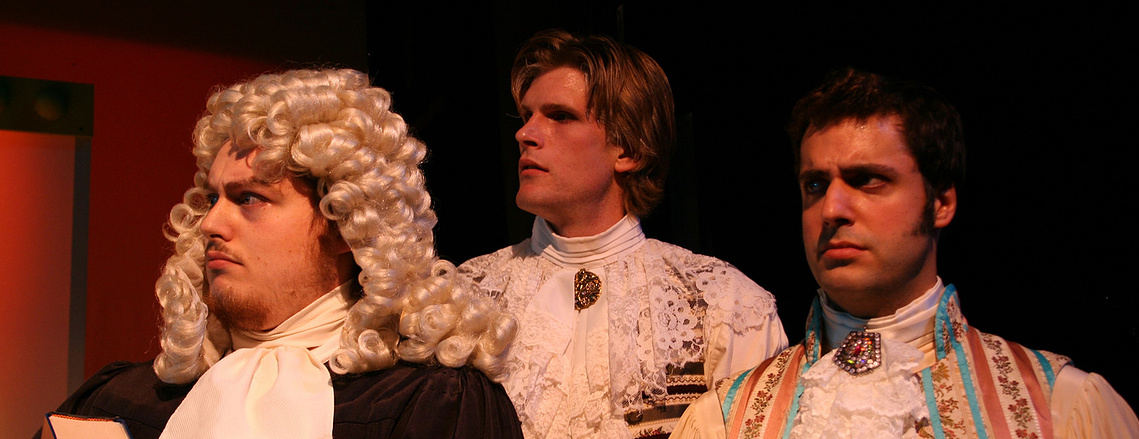
The director, who was once the central focus of the ensemble along with the text, is now more of an outside entity looking in. This is how it should be. The director needs to be able to stand back and respond to the work as an unbiased onlooker to what is being created by the actors onstage. The actors, in turn, rely on the director to inform them of what is working and what is not. What is "working" is believable and does not break the audience from the world of the play. When watching a run-through of the play, if the director's attention is thrown away from the story being told, the chances are that something has occurred on stage that is outside the world of the play. Any action taken by the actors that are not in keeping with the world of the play is usually not believable.
"When an actor is completely absorbed by some profoundly moving objective so that he throws his whole being passionately into its execution, he reaches a state we call inspiration."
- Konstantin Stanislavski
The actors have taken the text from the printed page and turned it into a living entity that can move the audience. Characters have been fully developed and have clear objectives throughout the entire play. A united ensemble exists where each actor gives themselves over to the story being told and to the other actors. The lights have been hung, the costumes fitted and the actors have completed putting on their make-up. The audience has assembled, and the stage manager has called for places.
At this point, just as the actors are about to go onstage for their first public performance, I gather the actors together and introduce the final step in this process. "No matter what happens out there, and things will happen – good and bad, expected and unexpected - do it for yourself and each other." These words encourage the actors to refocus, turn inward, and resist the temptation to "play" to the audience. It also alleviates inevitable tensions and reminds the actors to be there for each other no matter what.
On Working with Designers
Pioneering lighting designer, Jean Rosenthal, wrote in her book, The Magic of Light:
Collaboration flourishes when there is an understanding on the part of each member of the team that the others involved are to be respected and their authority fully recognized. The motions of carrying out the collaboration, the different techniques each group will require because of the personalities involved make collaboration a hope, not always an achievement [1].
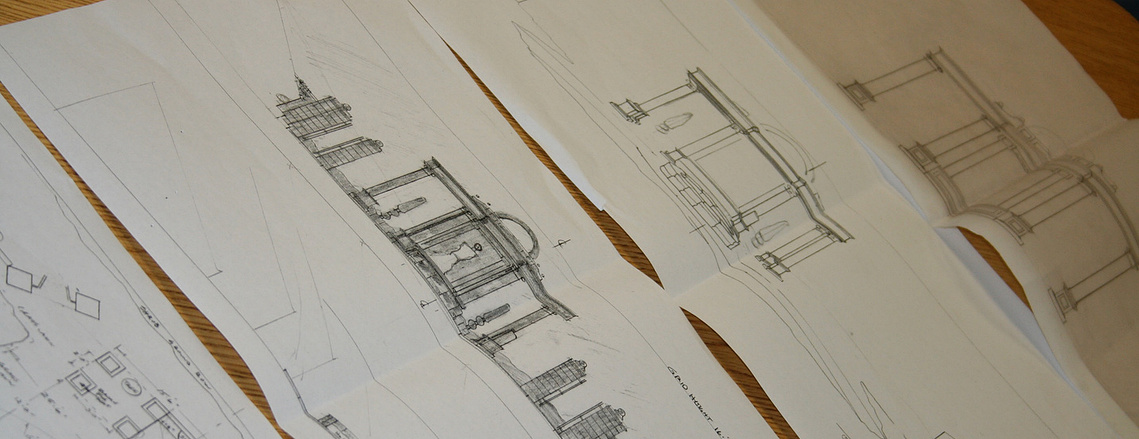
Theatre is the most collaborative art form, incorporating aspects of many other fine and performing arts. As such, this collaboration is comprised of artists working in separate yet integrated mediums, crafting layers in isolation that will optimally come together to form a cohesive work of living art. Sculpted and painted dimensional sets provide the space in which the physical form of the actor, adorned with fabric, moves in choreographed patterns while using voice and gesture to tell a story to an audience for whom the action must be illuminated.
An all-encompassing aesthetic is developed to integrate and unify the various production elements so that they seem in keeping with one another. Most often, the impetus for this aesthetic comes from the director, whose job is to create an overall vision for the work and ensure that all the elements remain within that vision and support one another in telling the story. Of course, to what degree realism and style interact in a production depends on the statement that the director, or the production team, wishes to make in the presentation of the play and how strongly that statement is to be clarified to the audience. Nevertheless, even with plays open to thematic interpretation, the message a director is trying to convey through the production elements must be derived from the text itself.
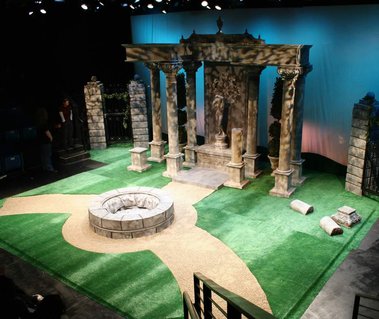
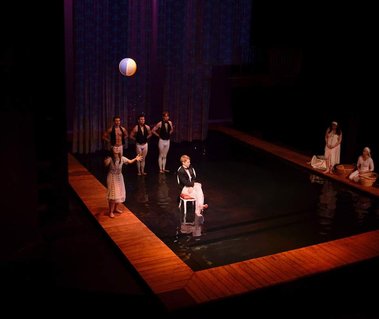
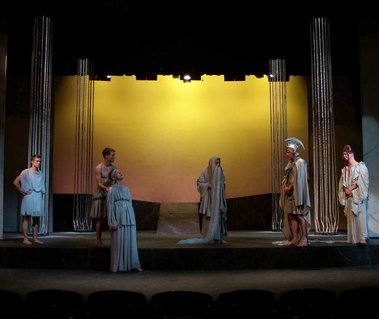
As with any collaboration, communication is essential for contributing to and exploring the creative impulse. The importance of communicating a clear conceptual vision to all the designers who will work to bring that vision to life and the ability of those designers to communicate back to the director and fellow designers can not be underestimated. At further production meetings, the director and designers might engage in a collective exchange of ideas that will expand and detail the initial vision, and thought will be given to how all the elements will be unified. Communication is how the director can ensure that all the elements stay within the chosen concept and are working to create a unified vision in dimension, style, time, historical era, and level of realism.
[1] Rosenthal, Jean, and Lael Wertenbaker, The Magic of Light (Boston: Little Brown, 1972)